“How much does custom software cost?” sounds like a simple question, but a useful answer requires more than a number. A customer portal, an internal approval tool, and a regulated data platform may all be called custom software while carrying very different levels of complexity and risk.
A credible estimate explains what the team will build, which assumptions the price depends on, how uncertainty will be reduced, and what ownership costs continue after launch. This guide gives business leaders a practical way to build a 2026 software budget and compare proposals without relying on an unrealistic universal price.
Screen count is not the same as complexity. A simple-looking approval screen may contain multiple roles, thresholds, exception paths, notifications, and audit requirements. Estimates improve when requirements are expressed as complete user outcomes: who starts the process, what information is required, which decisions occur, and what marks the work complete.
Connecting an application to accounting, CRM, identity, payment, marketplace, or legacy systems can be a major part of the budget. The work includes more than calling an API. Engineers must handle authentication, rate limits, incomplete records, retries, reconciliation, vendor changes, and failure visibility. Data migration adds profiling, cleanup, mapping, trial runs, validation, and rollback planning.
An internal tool used by five trained specialists needs a different design effort than a public product serving thousands of first-time users. Research, prototypes, responsive behavior, accessibility, content design, and usability testing reduce confusion and support demand. Skipping this work may lower the first estimate while increasing rework after launch.
Authentication, permissions, encryption, logging, secure configuration, dependency management, backups, and incident preparation should be designed into the system. Regulated or sensitive data may require additional controls and evidence. NIST’s Secure Software Development Framework provides a common set of practices for reducing vulnerabilities across the software lifecycle.
Automated tests, code review, staging environments, deployment pipelines, monitoring, and recovery procedures are part of the product—not optional paperwork. They help a team release changes safely and diagnose problems quickly. A proposal that omits them may appear cheaper because operational risk has been moved to the customer.
Software needs security updates, dependency upgrades, monitoring, backups, user support, and improvements as the business changes. Budget for the first year of operation, not only the launch date. Hosting is often a small part of total ownership compared with support, manual operations, and future development.
Before committing to a large build, a focused discovery phase can validate the business problem, map workflows, identify data and integration risks, define the first release, and produce an evidence-based delivery range. This is not a paid sales presentation. It should create reusable artifacts: a prioritized scope, architecture direction, risk register, delivery plan, and explicit assumptions.
The 18F De-risking Guide recommends iterative delivery, a capable product owner, and contracts oriented around outcomes. The context is government technology, but the lesson is broadly useful: smaller feedback loops expose wrong assumptions before they become expensive.
Do not compare only the totals. Normalize each proposal against the same questions:
A low fixed price built on vague requirements is not certainty. It can lead to change fees, reduced quality, or conflict over what “done” means. A range with documented assumptions and a clear process for reducing uncertainty can be more trustworthy than a precise number unsupported by evidence.
A useful early budget separates work into decision points:
This structure gives leaders options. If discovery changes the business case, they can stop or redirect before funding the entire roadmap. If the first release demonstrates value, investment can expand with confidence.
Cost has meaning only in relation to an outcome. Define a baseline for cycle time, manual hours, error rate, conversion, support volume, or revenue delay. The FinOps Foundation’s unit economics guidance connects technology cost to business value metrics. That mindset is useful even before the cloud bill arrives: choose a unit of value, measure its current cost, and evaluate whether the new system improves it.
Bring a short description of the business problem, the people who use the process, current tools, approximate volumes, required integrations, data sensitivity, desired timing, and the decision the budget must support. Screenshots and sample reports help, but a perfect specification is not required. A capable team should help turn operational knowledge into testable scope.
Y-CTU plans and builds custom web, mobile, integration, and automation systems with clear assumptions and staged delivery. Share the workflow, users, integrations, and target outcome. We will help identify the major cost drivers and define the smallest responsible step toward a reliable estimate.
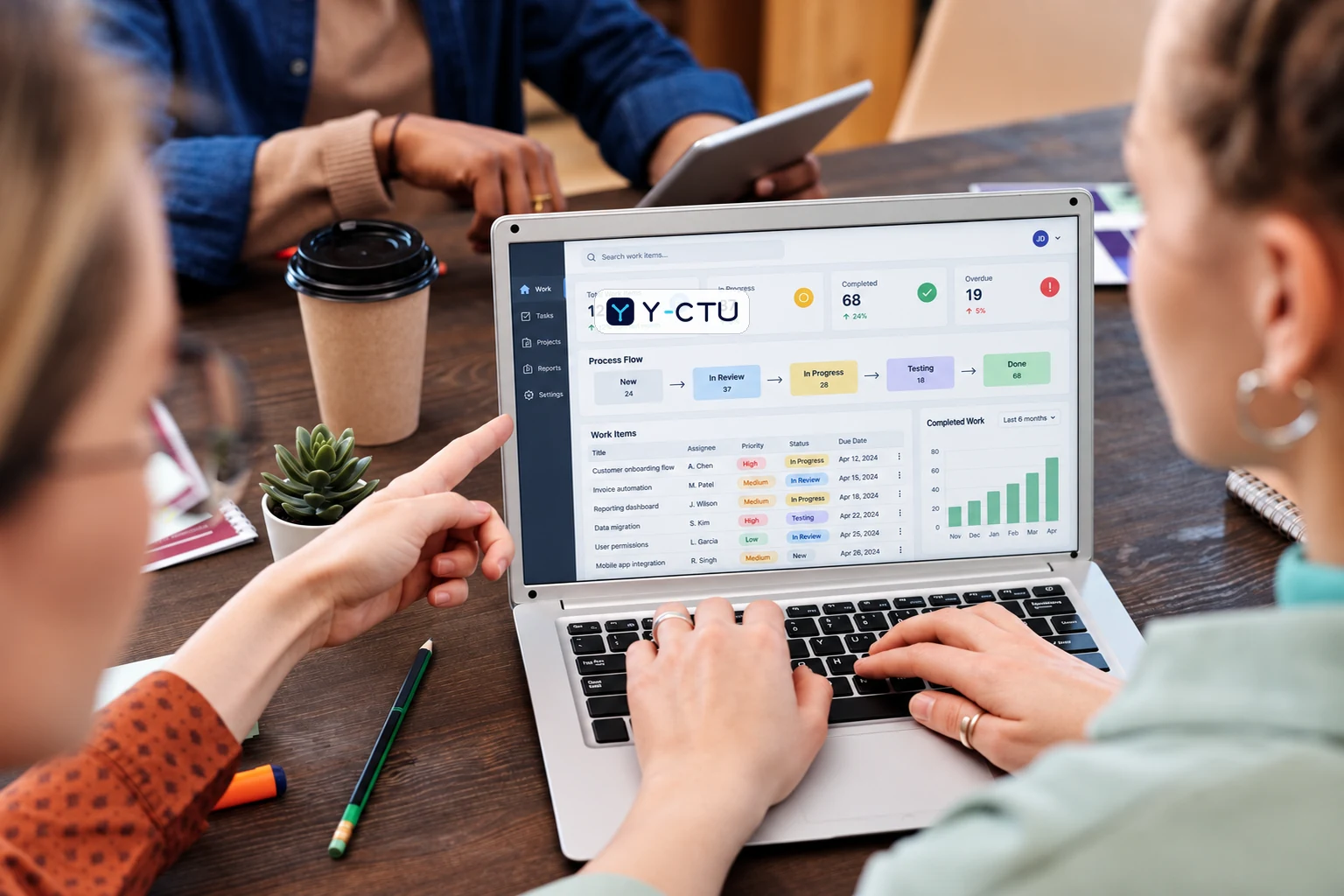
Editorial image: real photograph by Yan Krukau via Pexels; enhanced and branded by Y-CTU.